Everything You Need to Know About Google Search Console in 2026
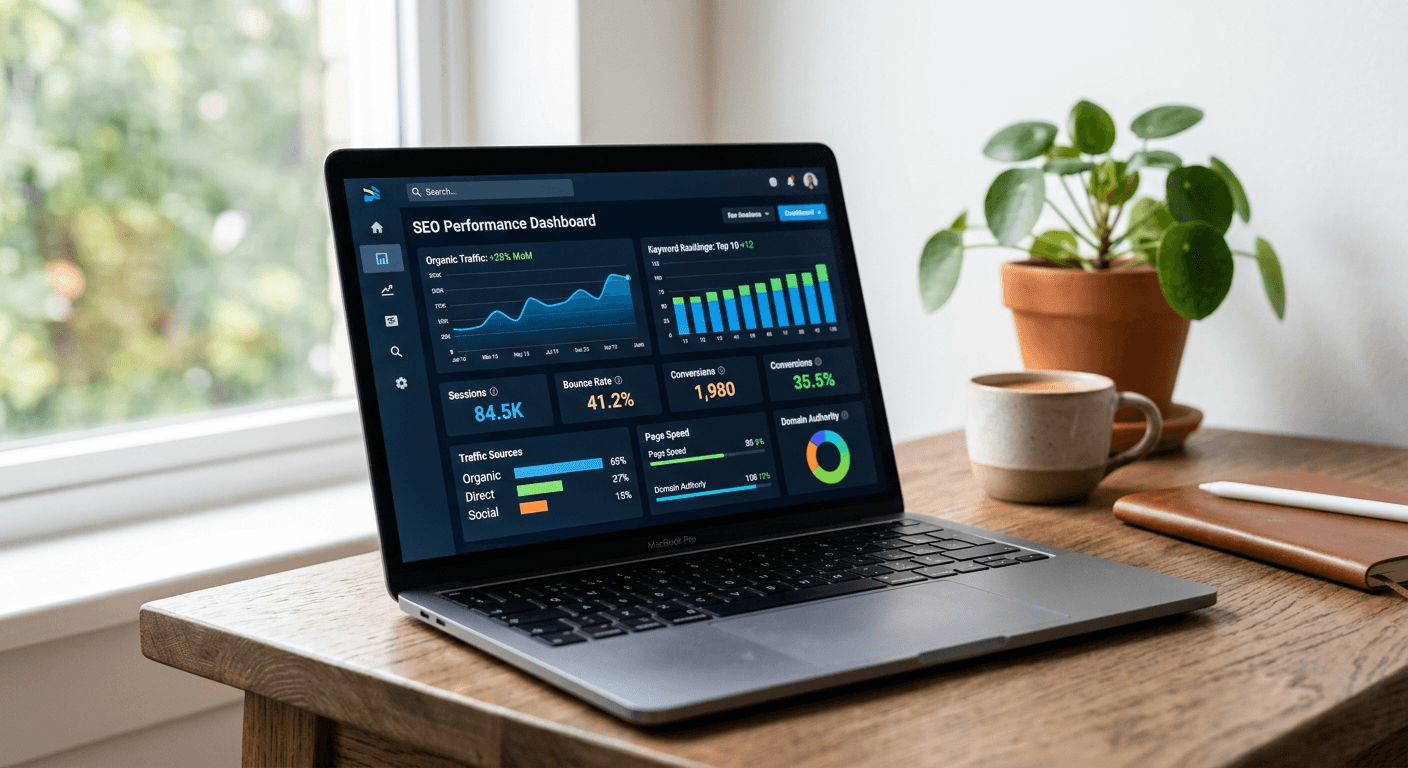
If you look back at how we handled SEO a few years ago, it feels like we were throwing darts in the dark. Today, Google Search Console is essentially the lighthouse in that storm. It’s the primary interface between your website and the search giant, giving you a front-row seat to how Google actually sees your pages. If you aren’t paying attention to these metrics in 2026, you’re basically running a business with your eyes closed. Why operate on guesswork when the data is sitting right there, waiting to be analyzed?

Quick Summary
Google Search Console is a free web service provided by Google that allows site owners to monitor, maintain, and troubleshoot their site's presence in search results. It provides critical data on traffic, indexing, and technical health.
- Monitor organic search performance and traffic trends.
- Identify and fix crawl errors affecting your site.
- Analyze specific search keyword ranking google data.
- Submit sitemaps for faster indexing.
Table of Contents
- Mastering Your Dashboard
- Optimizing for Search Keyword Ranking Google
- Advanced Techniques for SEO Ranking Verbessern
Mastering Your Dashboard
Think of the dashboard as the vitals monitor in a hospital. You walk in, look at the clicks, impressions, and average position, and you know immediately if the patient—your website—is thriving or struggling. Honestly, I believe most people just glance at the chart and call it a day. But the real gold is buried in the filters. You can break down data by device, country, or even specific pages. If you want to know more about the foundational rules of site management, check out these terms of service for digital platforms to stay compliant.
Interpreting Performance Data
Data is useless without context. Have you ever wondered why your clicks dropped while your impressions spiked? It’s usually a signal that your snippet isn’t compelling enough. It's the classic click-through rate dilemma. You’re showing up, sure, but nobody feels the urge to click. That’s a content problem, not a technical one. When you approach website optimization strategies with this mindset, you stop chasing algorithms and start serving human intent.
Optimizing for Search Keyword Ranking Google
When we talk about search keyword ranking google success, we have to talk about intent. Gone are the days when stuffing a phrase into a meta tag worked. Today, Google is a genius at understanding synonyms and context. You might be targeting one specific phrase, but the engine is ranking you for five others you never even considered. That’s why the Performance report is your best friend.
- Look for "low hanging fruit" - pages ranking on page two that just need a little more detail.
- Check for high volume queries where your click-through rate is suspiciously low.
- Audit your headings to ensure they answer the user’s question directly.
The Importance of Keyword Search for SEO
Keyword search for seo isn't just about finding high volume terms anymore; it’s about finding the right volume. Sometimes, a long-tail query with only fifty searches a month converts better than a broad term with thousands. Here’s a hot take: stop obsessing over vanity metrics. Focus on the queries that actually move the needle for your bottom line. If you are worried about how your data is handled during these deep dives, reading up on the privacy policies for search tools can provide some peace of mind.
Advanced Techniques for SEO Ranking Verbessern
If you really want to focus on your seo ranking verbessern game, you need to move beyond the basics. Use the URL Inspection tool like a surgeon. Need to know why a page isn't indexed? Google will tell you exactly what’s wrong—usually a directive in your robots.txt file or a canonical tag that’s pointing the wrong way. Don't be afraid to get your hands dirty in the settings.
Improving User Experience
Core Web Vitals are no longer just suggestions. They are baked into the ranking algorithm. If your mobile site takes five seconds to load, Google is going to penalize you, and your rankings will reflect that. Use the GSC reports to find slow pages, fix the layout shifts, and watch your traffic climb. It’s not magic; it’s just good engineering. Keep your site fast, keep your content relevant, and the search engine will eventually get the memo. It takes time, yes, but persistence usually wins out in the long run.