How to Optimize Magento Sites for Search Engines
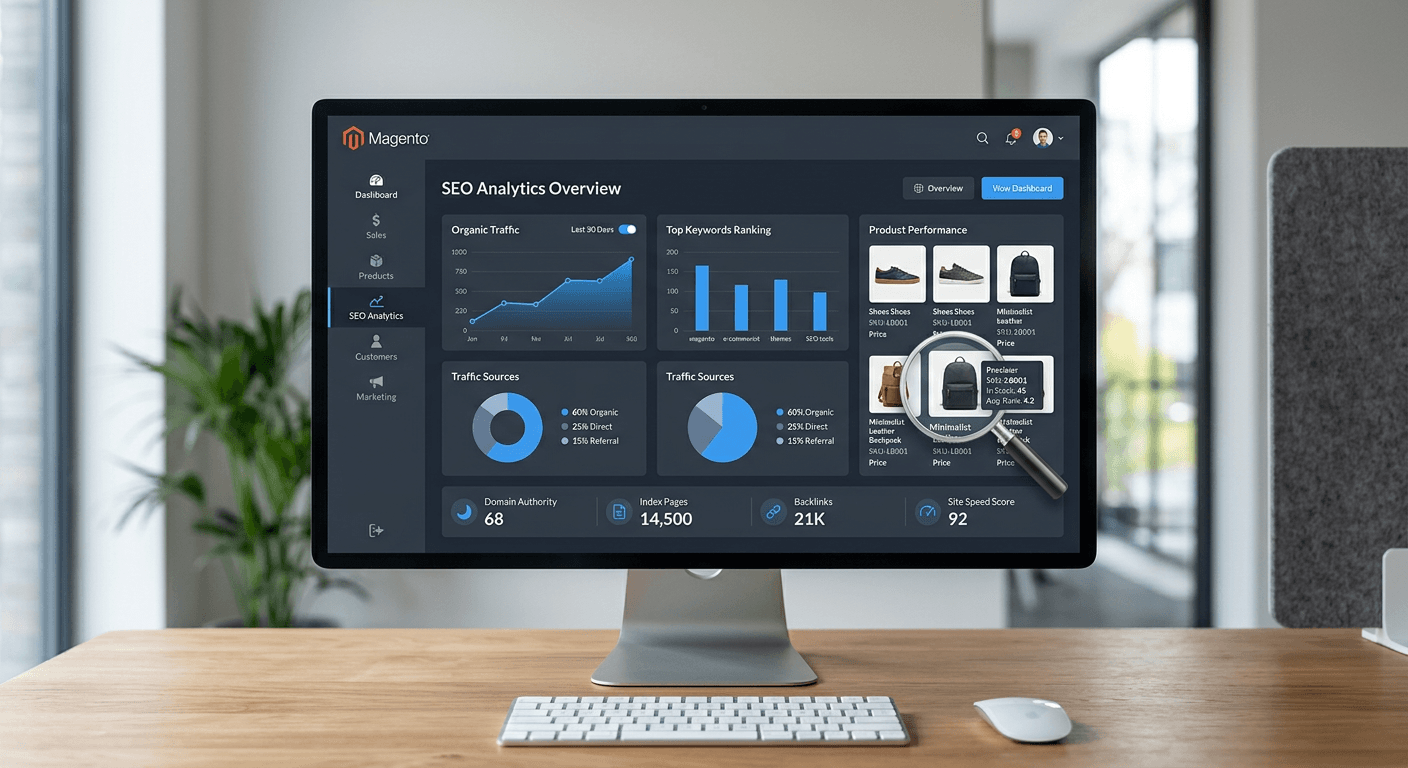
Implementing effective search engine optimization magento strategies is critical for driving organic traffic to your e-commerce storefront. Because Magento is a feature-rich, complex platform, its out-of-the-box settings are rarely sufficient for high-level rankings in competitive markets. Mastering the technical nuances of this ecosystem ensures that search engines can crawl, index, and rank your product catalog efficiently while minimizing the risk of duplicate content or crawl budget exhaustion.
Quick Summary
Search engine optimization magento requires a combination of technical configuration, structured data implementation, and content architecture management. By fine-tuning URL structures, optimizing crawl directives, and ensuring rapid server performance, you can significantly improve your storefront visibility.
- Configure your robots txt seo optimization to prevent indexation of non-essential faceted navigation pages.
- Leverage native SEO settings to manage canonical tags and meta descriptions.
- Prioritize core web vitals and mobile responsiveness for better ranking signals.
- Use structured data to capture rich snippets in search results.
Table of Contents
- Technical SEO Foundation
- Optimizing Robots.txt and Crawling
- Structuring Product and Category URLs
- Managing Content and Duplicate Issues
- Common Pitfalls and Troubleshooting
- Frequently Asked Questions
- Recommended Reads

Technical SEO Foundation
Magento offers an expansive set of configuration panels that serve as the bedrock of your search performance. Before diving into external campaigns, you must ensure that your store uses search-engine-friendly URLs and that the platform is configured to generate an XML sitemap automatically. Navigate to the storefront configuration settings to enable the "Use Web Server Rewrites" feature; this removes the index.php portion from your URLs, creating cleaner, more readable paths that search engine algorithms prefer.
Furthermore, site speed is a non-negotiable factor in modern ranking algorithms. Magento is resource-intensive, so implementing Full Page Caching (FPC) and utilizing a Content Delivery Network (CDN) is essential. While high-quality search engine optimization services dubai providers often emphasize content, technical optimization ensures that your server response times stay within the thresholds required by Google's Core Web Vitals. Always audit your site performance before considering significant changes to your theme or plugin stack.
Optimizing Robots.txt and Crawling
A precise robots txt seo optimization strategy prevents Googlebot from wasting crawl budget on irrelevant pages. Magento's dynamic nature often creates thousands of variations through filtering (faceted navigation), which can lead to index bloat. You should explicitly disallow paths related to catalog search, checkout flows, and customer account pages within your robots.txt file to ensure search engines focus only on high-value product and category landing pages.
When editing your robots.txt file, ensure that you do not accidentally block CSS or JavaScript files, as these are critical for rendering the page properly in a modern browser context. You can manage these directives directly within the Magento admin panel under the "Search Engine Robots" section. Remember that a well-crafted robots.txt file acts as a gatekeeper; it keeps search bots on the path you want them to travel, which is a fundamental aspect of search engine optimization what is it in the context of large e-commerce catalogs.
Structuring Product and Category URLs
URL hierarchy in Magento should be logical and descriptive. By default, Magento allows you to decide whether product URLs should include the category path. For most retailers, a flat URL structure (domain.com/product-name) is preferable for SEO, as it keeps URLs short and prevents issues if a product is moved between multiple categories. This approach simplifies link building and reduces the risk of long, complex strings that might trigger crawl errors.
Ensure that all your category and product pages have unique, manually written meta titles and descriptions. While auto-generation tools exist, they often fail to capture the user intent behind search queries. Use descriptive keywords naturally within these fields to improve your click-through rate (CTR) from the search results page. If you are unsure about the financial commitment required for professional maintenance, understanding that long-term seo optimization cost is an investment in recurring traffic is key to justifying these efforts.
Managing Content and Duplicate Issues
Duplicate content is perhaps the most significant hurdle for Magento sites. Because products can often be accessed through different category paths or filtered views, Magento generates multiple URLs for the same item. Canonical tags are your primary tool for managing this. Configure your Magento store to use canonical meta tags for both products and categories, which signals to search engines that the specified URL is the primary, master version of the page.
Beyond technical canonicalization, focus on creating unique content for your category pages. Instead of merely listing products, add descriptive text below the product grid. This adds depth to the page, helps with keyword relevance, and provides context for search engine crawlers. Avoid copying manufacturer descriptions, as this is a common trap that results in thin content penalties across your entire site.
Common Pitfalls and Troubleshooting
One of the most common mistakes is failing to configure internal search tracking. If users cannot find what they need on your site, search engines perceive this lack of engagement as a negative signal. Regularly review your site search queries to understand what your customers are looking for, and optimize your navigation accordingly.
Another pitfall is ignoring broken links, especially after product migrations or category restructuring. Use a crawler tool to identify 404 errors and implement 301 redirects for any removed product pages to a relevant category or similar product. Never leave a dead link on your site, as this frustrates both users and crawlers, potentially damaging your domain authority over time.
Pro Tip: Monitor your search console data for "indexed but not submitted in sitemap" warnings. This often indicates that your internal linking structure is weak and that certain parts of your catalog are effectively orphaned.
Frequently Asked Questions
- How does Magento affect SEO compared to other platforms? Magento provides unparalleled control over technical SEO settings, but it requires more hands-on configuration to maintain performance than simplified SaaS platforms.
- Do I need a third-party extension for SEO? While native features cover the basics, many store owners use extensions to manage meta tags in bulk, improve XML sitemap granularity, and handle advanced canonicalization.
- Is the cost of Magento SEO higher than other platforms? The seo optimization cost is generally higher because of the technical depth required to manage large-scale inventories and complex server configurations.
- How often should I update my robots.txt file? Review your robots.txt file whenever you add new modules or change your site structure to ensure new dynamic paths are properly managed.