Mastering Your Social Media Content Planner for Consistent Audience Growth in 2026
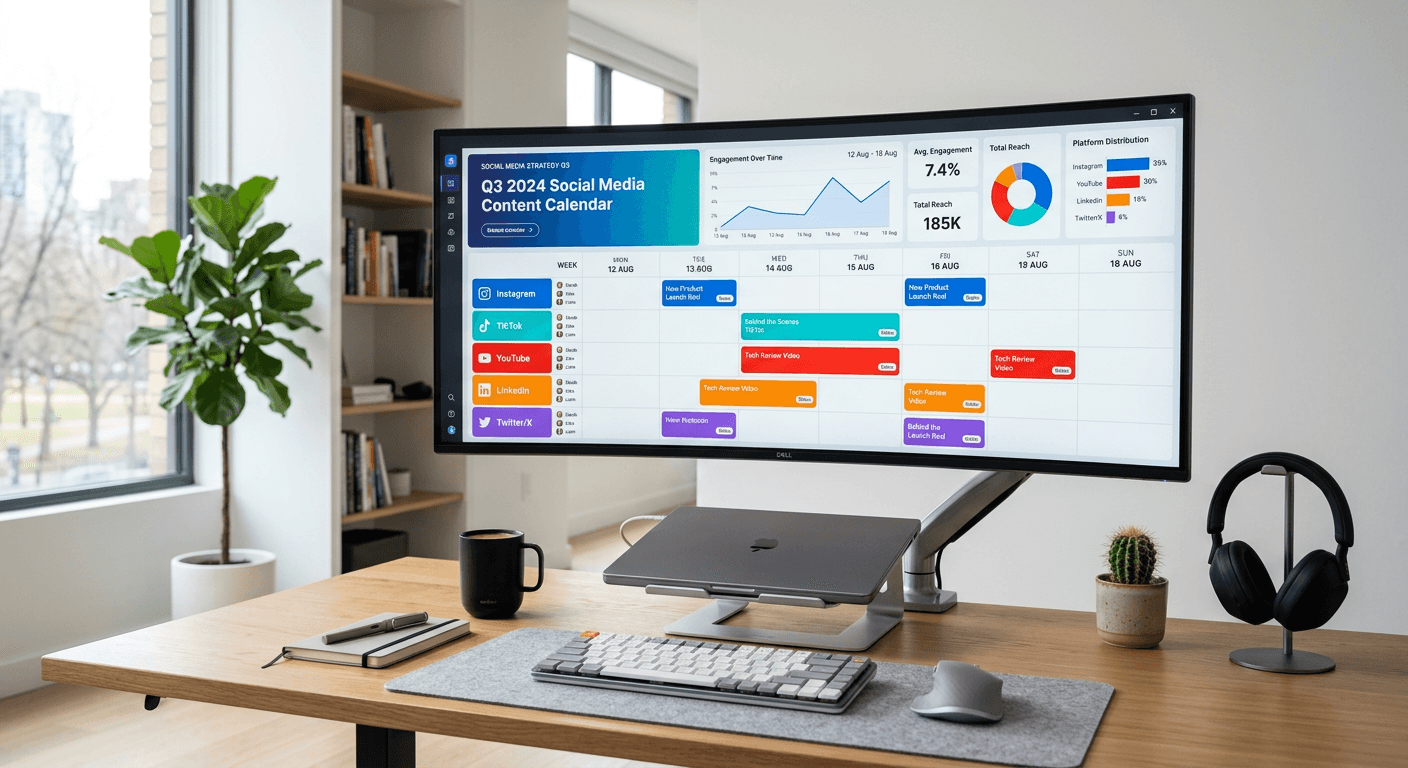
Developing a high-impact digital presence requires moving beyond sporadic posting toward a structured social media content planner that aligns with your broader business objectives. In an era where algorithms prioritize depth and relevance, the difference between stagnant engagement and consistent growth lies in the systematic planning of your digital assets. Whether you are scaling a brand or managing community sentiment, a refined approach to scheduling and thematic planning is essential for maintaining audience attention.

Quick Summary
A social media content planner is a strategic framework used to organize, schedule, and execute multi-channel messaging. It ensures brand consistency, optimizes resource allocation, and aligns content output with marketing goals.
- Aligns content themes with seasonal or business milestones.
- Reduces cognitive load for the social media content manager.
- Enables data-driven adjustments through consistent performance tracking.
- Ensures cross-channel synchronization for unified brand voice.
Table of Contents
- Defining Your Core Strategy
- Structuring the Content Calendar
- Operational Workflow for Managers
- Common Pitfalls and Troubleshooting
- Frequently Asked Questions
- Recommended Reads
Defining Your Core Strategy
A robust social media content strategy acts as the blueprint for every piece of content you produce. Without a clear directive, even the most visually appealing posts will fail to drive meaningful business results. Begin by auditing your current engagement levels and identifying which content types resonate most with your audience. This process involves analyzing historical data to understand when your followers are most active and what formats-video, carousel, or text-heavy insights-drive the highest interaction.
Once your goals are established, define your content pillars. These are the 3-5 core topics that represent your brand authority. By categorizing your output, you ensure that every post serves a purpose, whether it is educational, promotional, or community-focused. Adhering to these pillars helps a social media content manager maintain focus and avoid the trap of posting filler content that dilutes brand identity. For those navigating complex regulatory environments or high-compliance sectors, ensuring that your content strategy remains transparent is as important as the engagement metrics themselves.
Structuring the Content Calendar
The social media content calendar serves as the operational manifestation of your strategy. A effective calendar goes beyond simple dates; it should include metadata for each entry, such as the intended platform, target audience segment, content format, and the specific call-to-action (CTA). By mapping out a monthly view, you gain the ability to visualize the ebb and flow of your messaging, ensuring a healthy balance between value-driven content and direct promotional efforts.
When building your calendar, incorporate a "buffer zone" for reactive or trending content. While planned posts are critical, the ability to jump on a relevant industry trend can amplify your reach significantly. Use your calendar to document the status of each asset: ideation, draft, review, and live. This lifecycle tracking prevents bottlenecks and ensures that your standard operating procedures are followed during the publication process, keeping your brand safe and reliable at all times.
Operational Workflow for Managers
For a social media content manager, efficiency is key to avoiding burnout. Start by dedicating specific time blocks for content creation rather than creating posts in real-time. Batching your workflow-where you spend one day on video scripting, another on visual design, and a third on caption writing-dramatically increases output quality and decreases the stress associated with daily deadlines. This methodical approach allows for better creative flow and minimizes the chances of errors.
Furthermore, utilize automation where appropriate, but never at the expense of authentic engagement. Automation tools should handle the scheduling, while your human team remains responsible for monitoring comments and fostering community conversations. A well-managed queue is a proactive tool, allowing you to monitor performance metrics during the weekend without needing to be tethered to your desk. Consistent monitoring of these metrics allows you to pivot your strategy in real-time based on what is currently working.
Pro Tip: Never treat your calendar as a static document. Review your scheduled content every week to ensure that it remains contextually relevant to ongoing market changes and current events.
Common Pitfalls and Troubleshooting
One of the most frequent mistakes is over-optimization. If your content feels too clinical or repetitive, engagement will inevitably drop. If you find your metrics stagnating, try varying your post formats or introducing a new content pillar that addresses a pain point you previously overlooked. Another common issue is inconsistent publishing cadences; rather than aiming for daily posts that lack depth, it is often more effective to publish three high-value, well-researched posts per week.
Finally, ignore vanity metrics like follower count in favor of engagement and conversion data. If a post gets hundreds of likes but fails to drive traffic or leads, it is not serving your business goals. Audit your posts by comparing their performance against your primary KPIs. If a specific format consistently fails to deliver, remove it from your planner to reclaim time for high-performing content formats.
Frequently Asked Questions
How far in advance should I plan my content?
For most businesses, planning 30 days in advance provides the best balance between long-term strategic alignment and the flexibility needed to address real-time industry changes.
How many content pillars should I have?
Aim for 3-5 core pillars. Too few can lead to repetitive messaging, while too many can confuse your audience and make your brand positioning unclear.
What should I do if a scheduled post becomes insensitive due to a sudden news event?
A social media content manager should have a crisis plan to pause scheduled posts immediately. Always check the day’s global and industry news before the automated publishing sequence triggers.
Does posting frequency matter more than quality?
Quality always outweighs frequency. Algorithms prioritize dwell time and meaningful interactions over simple volume. It is better to have one high-performing post per week than five low-engagement ones.